
Commercial Construction
Resort & Glamping Construction
Vacation resorts, glamping campuses, and cabin villages serve guests during important moments. Woolsey approaches these projects with the planning, patience, and respect that destination hospitality work demands.
Resort and glamping construction is one of the fastest-growing segments of Texas tourism, and one of the most demanding to deliver. Phased site development, branded franchise standards, hospitality-grade construction, and active operations all need to be coordinated in parallel.
Woolsey built Camp Fimfo, two family resorts covering roughly 650 acres in New Braunfels and Waco with close to 1,000 rentable sites, waterparks, and an alpine coaster, and KOA Fredericksburg, a ground-up KOA resort in the Texas Wine Country. We work with resort developers, operators, and franchise partners early to identify the details that will shape opening day, and help the project move forward with confidence.
What We Build
Branded Campgrounds and KOA Resorts
KOA Fredericksburg, a ground-up KOA resort in the Hill Country wine corridor. Franchise brand standards dictate the welcome center, the site layout, the amenity set, and the finishes, and the build has to satisfy the brand's inspection as well as the owner's.
Glamping Resorts and Cabin Villages
Camp Fimfo. Cabins, glamping structures, and rentable sites built to hospitality standards on a campus scale, with private bathhouses, gathering spaces, and the infrastructure underneath that guests never see and always notice when it fails.
Full-Service Resort Campuses
Camp Fimfo, roughly 650 acres across two locations with close to 1,000 rentable sites, waterparks, and an alpine coaster. Work at this scale is phased so the property opens and earns while the next phase is under construction.
Resort Amenity Buildings
Pool complexes, splash pads, welcome centers, camp stores, event pavilions, and food service buildings. Hospitality-grade finishes with commercial durability, built for heavy guest traffic and the maintenance crew that keeps up with it.
RV Resort Infrastructure
Full-hookup pads, utility distribution, road networks, clubhouses, and amenity facilities. Most of the cost is in the ground: water, wastewater, and electrical distribution across acreage, sized for peak season rather than an average day.
Event Venues and Outdoor Entertainment
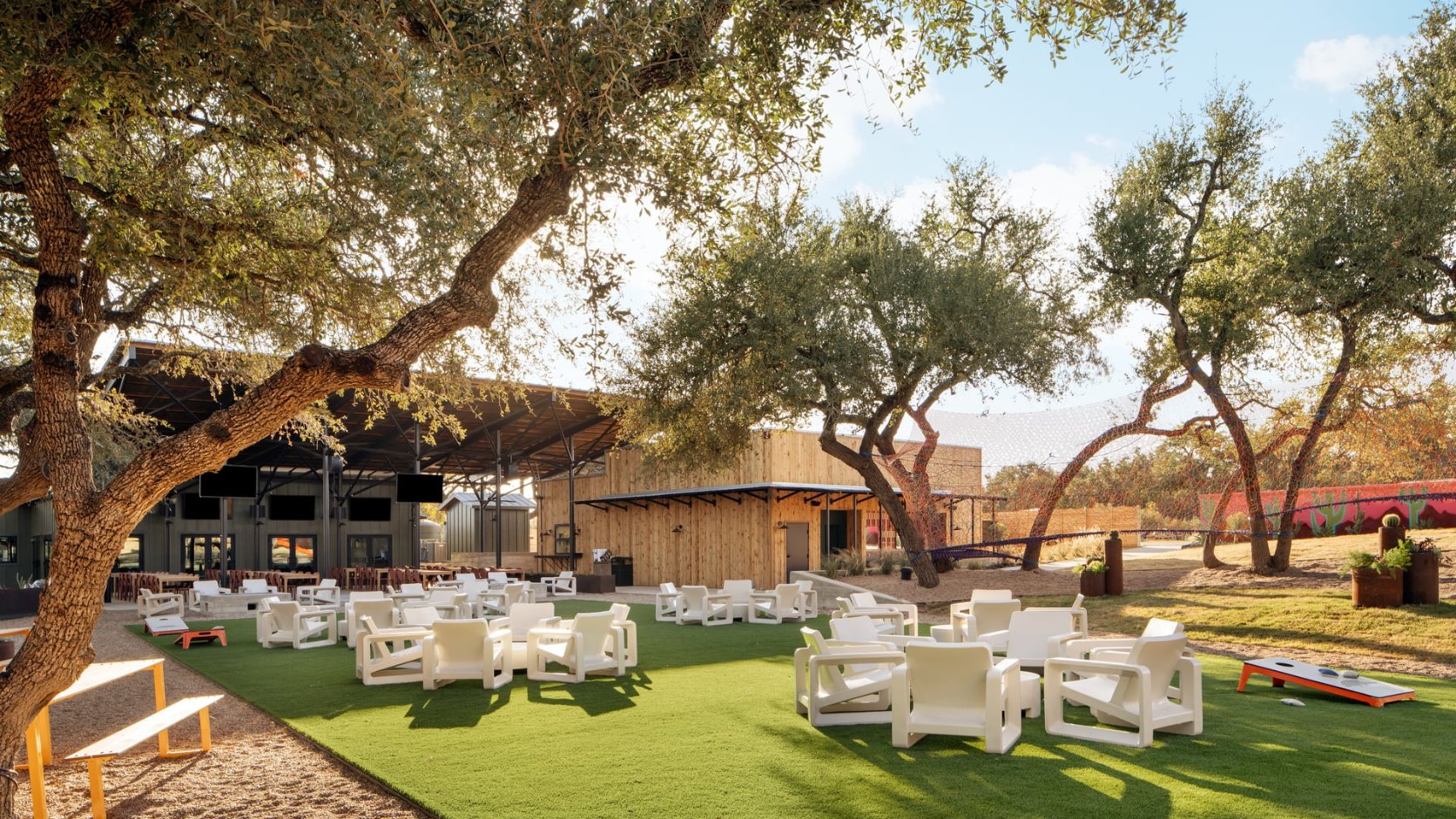
The Neon Armadillo in Wimberley, and venue work integrated into resort campuses. Amphitheaters, stages, and event spaces designed for capacity, acoustics, weather, and the way a crowd actually moves.
Why Woolsey
Vacation resort construction is fundamentally different from standard commercial construction. A resort is not a single building, it is a campus. It requires master-planned site infrastructure: roads, utilities, water systems, wastewater, electrical distribution, and stormwater management across dozens or hundreds of acres. It requires hospitality-grade amenity buildings: pools, splash pads, event venues, welcome centers, camp stores, and food service facilities. It requires guest accommodations: cabins, glamping structures, and RV pads with full hookups. And it all has to be built in phases so the resort can begin generating revenue while construction continues.
Woolsey has delivered this. Camp Fimfo involved roughly 650 acres across two locations, with phased construction that allowed the resort to open and operate while new phases were under construction. KOA Fredericksburg required a ground-up resort built to KOA's brand standards in the heart of the Hill Country wine corridor.
Our preconstruction advisory process is specifically designed for resort developers. We evaluate site feasibility, analyze infrastructure costs, model phasing strategies, and help you build a pro forma grounded in real resort construction experience.
Our Process
Site Feasibility and Deal Evaluation: Before you commit capital, we evaluate your site for resort development potential. Topography, utility access, water and wastewater capacity, road access, zoning, and environmental considerations. We help you understand what the site can support and what it will cost to build, before you buy the land.
Master Planning and Preconstruction: We develop a comprehensive site master plan with phasing strategy, infrastructure layout, amenity placement, and accommodation siting. Detailed cost modeling for each phase allows you to make investment decisions based on real numbers. We coordinate with civil engineers, environmental consultants, and regulatory agencies.
Phased Construction: Resort construction is almost always phased. We develop and execute phasing plans that allow early phases to open and generate revenue while later phases are under construction. This requires careful infrastructure planning, construction sequencing, and operational coordination.
Amenity and Accommodation Construction: From pool complexes and splash pads to welcome centers and camp stores, from cabins and glamping structures to RV pads with full hookups, we build every component of the resort to hospitality-grade standards with the durability to withstand heavy guest use.
Opening and Operations Support: We support your team through commissioning, systems training, and the critical first weeks of operation. We do not disappear after the certificate of occupancy.
Vacation Resort & Glamping Construction: Common Questions
How much does it cost to build a glamping site?
The cabins and tents are the smallest part of the cost, which surprises most people. The money goes into the ground first: roads, water, wastewater, and electrical distribution across the acreage, sized for the busiest weekend of the year rather than a quiet Tuesday. Then the amenity buildings guests expect, bathhouses, a welcome center, gathering space, and anything more ambitious the concept calls for. Then the accommodations themselves, where the range between a canvas tent on a platform and a fully finished cabin is enormous. Site conditions, terrain, tree cover, and how far the utilities have to travel to reach the property change every one of those numbers. We do not publish a per-site figure. We build a real budget from your site and your concept in preconstruction, before you commit to the land.
What do you need to start a glamping business?
From the construction side, five things decide whether a site can work. Land with legal access and a location guests will drive to. Water, either a connection or a well with enough capacity for peak occupancy. Wastewater, which in rural Texas usually means a permitted on-site system sized for the whole property. Power to the site and distribution across it. And the approvals: county and any state permits, and in parts of the Hill Country, aquifer and floodplain review. Everything else, the accommodations, the amenities, the brand, sits on top of those five. Getting them evaluated before the land is purchased is the single most valuable thing a developer can do, because a site that fails any one of them is expensive to fix and sometimes cannot be.
How do you build a glamping site?
In phases, and in a specific order. Site evaluation first: access, water, wastewater, power, terrain, and approvals, before any design work. Then a master plan that lays out where the accommodations, amenities, roads, and utilities go, and divides the property into phases so the first sites can open while later ones are still being built. Then infrastructure, which is the longest and least visible part of the work. Then the amenity buildings and the accommodations, usually in an order that lets the property open with a complete guest experience at a smaller scale rather than a half-finished one at full scale. Camp Fimfo was built this way, and the phasing is what allowed the resort to operate while it grew.
Is glamping a profitable business?
That is a question for your operator and your lender, and we will not pretend to answer it for you. What we can speak to is the construction side of it. Profitability in outdoor hospitality is driven by the number of rentable sites a property can support against what it cost to build them, and that ratio is set by decisions made before construction: how the infrastructure is sized, how the phases are sequenced, and how much of the budget goes into the ground versus the accommodations. A property that opens sooner, at a smaller scale, and expands from revenue is in a different position from one that waits to open until everything is finished. Those are construction decisions, and they belong in the plan before the money moves.
Planning a Vacation Resort or Glamping Project?
Before you buy the land, before you hire an architect, before you talk to a bank, call Woolsey. From KOA campgrounds to glamping destinations to full-service resort campuses, we are the builders resort developers call when experience and execution matter.