
Commercial Construction
Hospitality Construction & Design-Build
Hotels, resorts, and restaurants live or die on the guest experience. Woolsey approaches these projects with the planning, coordination, and respect for the operation that hospitality work demands.
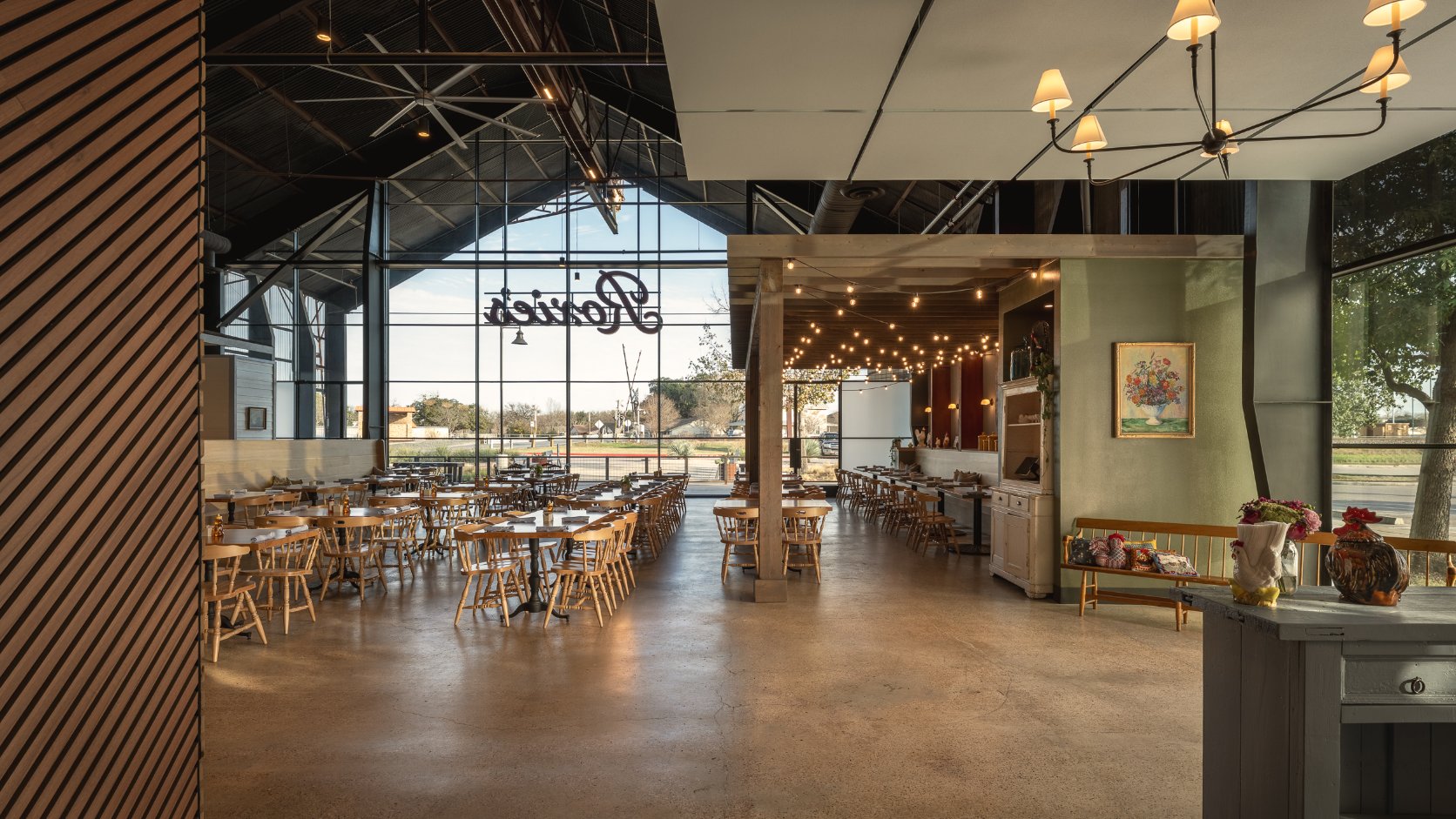
Hospitality construction is where Woolsey has built much of its reputation. Camp Fimfo, two family resorts covering roughly 650 acres in New Braunfels and Waco with close to 1,000 rentable sites, waterparks, and an alpine coaster. The Albert Hotel renovation in Fredericksburg. Roxie's at Buda Mill & Grain. Lost + Found in New Braunfels. KOA Fredericksburg. All of it is part of that history.
These are multi-phase, multi-million-dollar developments that reward careful planning, steady coordination between owners, designers, and operators, and a clear understanding of how every construction decision affects opening day. A restaurant is judged on the night it opens. A hotel is judged on every night after. Woolsey works with hospitality developers early, so the path from concept to opening is honest, deliberate, and built to perform.
What We Build
Hotels and Resorts
The Albert Hotel in Fredericksburg and Camp Fimfo in New Braunfels and Waco. Ground-up construction, historic renovation, and multi-phase resort campuses, built to two standards at once: what the guest sees and what keeps the property running behind the wall.
Restaurants and Bars
Roxie's at Buda Mill & Grain, Lost + Found, the Leaning Pear in Wimberley. Commercial kitchens, grease and gas rough-in, hood and fire suppression, and a health inspection that has to pass the first time, all sequenced against an opening date the owner has already announced.
Entertainment and Event Venues
The Neon Armadillo in Wimberley. Venues built for capacity, sightlines, acoustics, and the crowd that shows up on a Saturday night, with the bar, restroom, and egress capacity that a full house demands.
Campgrounds and Outdoor Resorts
KOA Fredericksburg and Camp Fimfo. Infrastructure-heavy work: roads, utilities, water and wastewater across large acreage, amenity buildings, and rentable sites, delivered in phases so the property earns while the next phase is under construction.
Why Woolsey
Hospitality construction demands a builder who understands commercial kitchens, liquor licensing requirements, acoustic design, accessibility, and the guest experience, not just concrete and steel. The kitchen alone carries grease and gas rough-in, hood and fire suppression, and floor drains placed where the line cooks actually work. The bar has its own set. The guest side has to look effortless while the back of house runs hard.
Our preconstruction advisory process is specifically designed for hospitality investors. We evaluate site feasibility, analyze construction costs against projected revenue, and identify design opportunities that improve the guest experience while controlling budget. We think like developers, not just contractors.
When your project is Camp Fimfo, KOA Fredericksburg, the Albert Hotel, or Roxie's at Buda Mill & Grain, you do not hire the cheapest contractor. You hire the one who protects your investment and delivers a venue that defines its market.
Our Process
Deal Evaluation: We analyze your site, your concept, and your pro forma before you commit capital. Feasibility, budget reality, and highest-and-best-use, all before a single shovel hits dirt.
Preconstruction: Detailed cost modeling, kitchen and bar infrastructure planning, acoustic design coordination, and regulatory review. We identify every issue before construction begins.
Design-Build Execution: Single-source accountability from concept through grand opening. Our integrated teams manage design, construction, and furniture and equipment coordination to keep your project moving with clear timelines and budget transparency.
Opening Support: We do not disappear after the certificate of occupancy. We support your team through punch list completion, systems training, and the critical first weeks of operation.
Hospitality Construction: Common Questions
How much does it cost to build a hotel in Texas?
Hotel cost is driven by four things before anything else: the number of keys, the brand standard or the level of finish an independent property chooses, the amenity program, and the site. A limited-service property with a breakfast room and a pool is a different building from a full-service hotel with a restaurant, bar, meeting space, and a spa, even at the same room count. Brand standards dictate finishes, systems, and often the exact products used. The site adds its own line: parking, utilities, drainage, and in the Hill Country, the rock. We do not publish a per-key or per-square-foot figure, because it would mislead you. We build a real budget in preconstruction, tied to your concept and your site, before you commit to either.
How much does a 300-room hotel cost to build?
Room count changes the shape of the cost more than it multiplies it. At 300 keys the building is almost certainly mid-rise or taller, which brings structured parking, elevators, a different structural system, and fire and life-safety requirements that a two-story property never sees. The back of house grows with it: laundry, food service, mechanical space, and staff areas. Amenities scale to the guest count. The same questions apply as at any size, brand standard, amenity program, and site, but at 300 rooms the answers carry more weight. This is the kind of project where a preconstruction budget built from the actual program pays for itself many times over, because the decisions made before design is finished set the cost of everything after.
Should I pay a contractor 50% upfront?
On a commercial project of any size, that is not how it works, and it should give you pause if it is proposed. Commercial construction is billed as the work is done: a monthly application for payment that itemizes what was completed that period, verified before it is paid, with a percentage held back until the project is finished and accepted. A deposit may cover long-lead materials that have to be ordered before work begins, and that deposit is itemized and tied to those specific items. That structure protects the owner, and it is what Woolsey uses. The contract spells out the schedule of values, the billing cycle, the retainage, and what triggers final payment, so there is never a question about what a payment is for.
Can a hotel stay open during a renovation?
Yes, and it is the normal way hotel renovation is done, because closing a property means losing every night of revenue for the duration. The work is phased by floor, by wing, or by room block, so a section is taken out of inventory, renovated, inspected, and returned before the next one comes offline. The planning that makes it work is about the guests who are still there: noise limits and work hours, dust and odor control, keeping corridors, elevators, and exits clear, and a schedule the front desk can plan bookings around. The Albert Hotel in Fredericksburg was a historic renovation, and that kind of work rewards a builder who treats the operating property as a client, not an obstacle.
Planning a Hospitality Project?
Before you buy the land, before you hire an architect, before you talk to a bank, call Woolsey. We are the builders serious hospitality developers call first.