
Strategic Property Consulting + Construction
Your Land Has More
to Give.
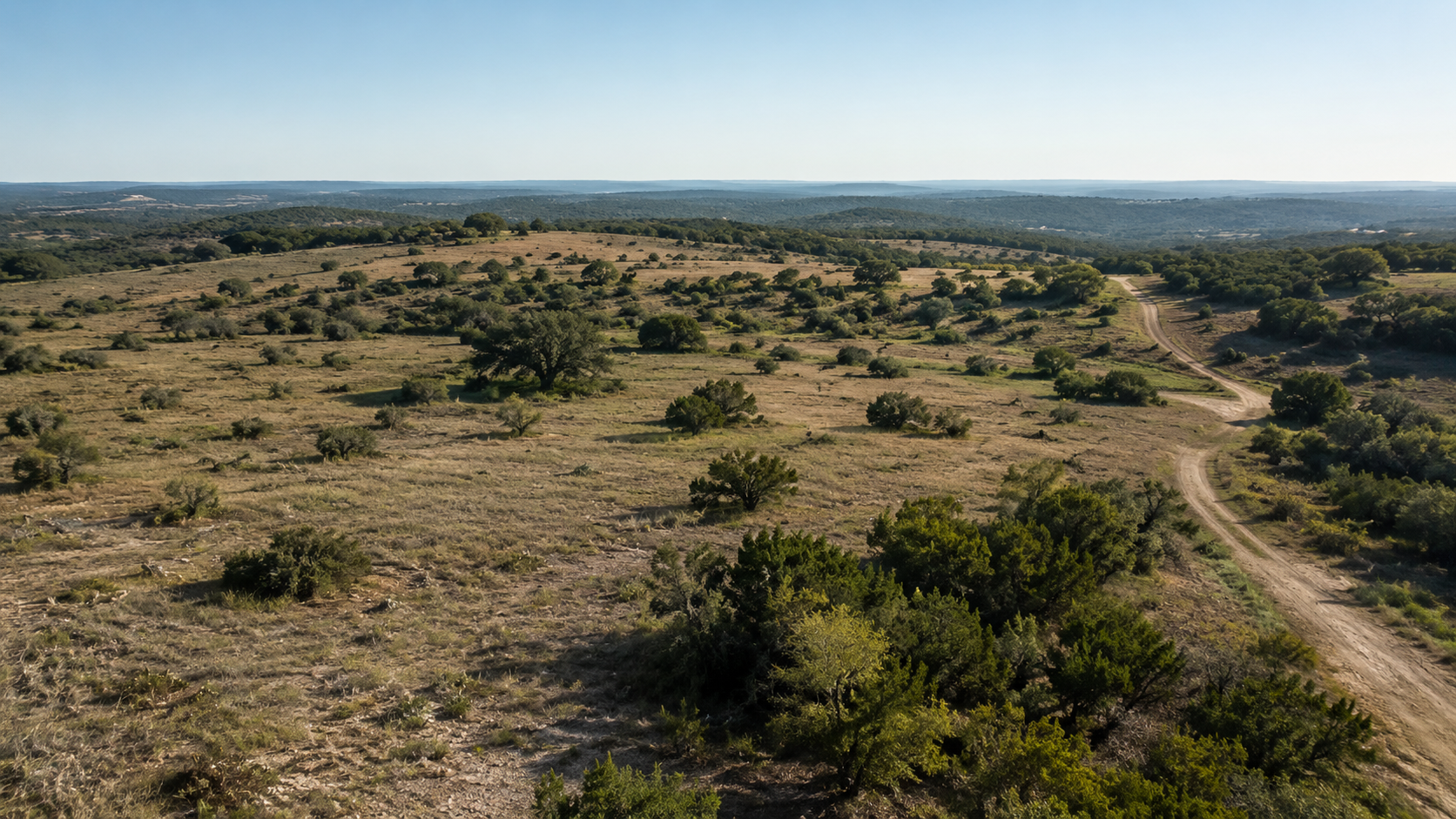
Many large acreage property owners in the Texas Hill Country are earning from a fraction of what the land could carry. Woolsey walks your property, identifies every opportunity, and builds the additions that turn your land into a revenue engine.
You own 40 acres with a vineyard. You are doing wine tastings on weekends. Business is good. But what if you added six luxury glamping tents on the back ridge with Hill Country views? What if you built a private event pavilion that books weddings every weekend of the season? What if you added a farm-to-table dinner experience with a licensed commercial kitchen? Woolsey can build all of it, and tell you what the numbers look like before you spend a dollar.
This is what we mean by Land & Property Maximization. Many large acreage property owners in the Texas Hill Country are generating revenue from a fraction of what their land is capable of producing. They have the acreage, the location, and the market demand, but they have not had a builder walk their property and show them what is possible.
Woolsey does not just build what you ask for. We help you see what your land is capable of generating. We walk your property with the eye of a developer, the knowledge of a builder, and the strategic thinking of an investor. We identify every revenue-generating addition your land can support, and then we build it to the standard that commands premium pricing.
Wine country, agritourism, and short-term rentals are all established markets in the Texas Hill Country. Land owners who add the right structures to the right properties are the ones who earn from them. The question is what your land can carry, and that is a question a builder can answer.
How We Approach Your Property
A Land Strategy Consultation with Woolsey is not a sales call. It is a strategic meeting where we walk your property, listen to your goals, and apply 25+ years of construction and development experience to identify what your land can support.
We start by understanding your current operation, what you are doing, what is working, and where the constraints are. Then we walk the property with fresh eyes. We evaluate topography, access, utilities, views, and proximity to roads and neighboring properties. We consider the local market, what visitors and guests in your area are willing to pay for, and what is underserved.
From that walk, we develop a Property Maximization Plan, a clear, prioritized list of revenue-generating additions your land can support, with preliminary cost estimates and revenue projections for each. You decide which opportunities to pursue. We build them.
Why Now
Wine country tourism, outdoor hospitality, short-term rentals, and agritourism, farm experiences, barn venues, ranch events, are all established parts of the Texas Hill Country economy. Woolsey has built in every one of them, from Camp Fimfo to the Albert Hotel to the tasting rooms and venues along the wine corridor.
Property owners who add the right structures to the right land are the ones who earn from those markets. The site work, the permits, and the buildings take time to plan and build, and the earlier the plan starts, the sooner the property is earning.
Call Woolsey before you decide your land is maxed out. It probably is not.
What We Build on Your Land
Every property is different. These are the revenue-generating additions we most commonly identify and build for Hill Country property owners.
Glamping Cabins & Luxury Camping
Safari tents, treehouse cabins, A-frames, and cabin villages. Woolsey built Camp Fimfo, a glamping resort across two Texas locations, and builds hospitality-grade glamping structures designed for year-round use and a guest experience that earns the nightly rate.
Wedding & Event Venues
Barn venues, covered pavilions, outdoor ceremony sites, and reception halls. The Hill Country hosts weddings nearly every weekend of the year, and a venue built to handle a crowd, with the parking, restrooms, kitchen, and sewage capacity that a crowd requires, is a different building from a barn with lights strung in it.
Short-Term Rental Cottages
Airbnb and VRBO cottages, guest houses, and casitas. Purpose-built short-term rentals designed for maximum occupancy, guest experience, and operational efficiency. Not converted bedrooms, dedicated revenue-generating structures built to hospitality standards.
Commercial Kitchens & Catering Facilities
Licensed commercial kitchens, catering prep facilities, and farm-to-table dining spaces. If your property hosts events, produces food, or serves guests, a commercial kitchen supports revenue streams that a residential kitchen cannot.
Agritourism Structures
Barn venues, tasting rooms, farm stands, u-pick facilities, and agricultural event spaces. Texas law gives a working farm or ranch that hosts visitors a specific liability protection when the required warning sign is posted, and a working ranch, vineyard, or farm may be one well-built structure away from a new line of revenue.
Retail & Boutique Spaces
On-site retail shops, boutique storefronts, artisan markets, and gift shops. Properties with visitor traffic, wineries, event venues, farms, can capture additional revenue with purpose-built retail space that complements the primary operation.
Pool Houses & Resort Amenities
Pool complexes, spa facilities, outdoor kitchens, and resort-style amenity buildings. For properties that host guests, whether overnight or for events, resort-quality amenities dramatically increase per-guest revenue and justify premium pricing.
Additional Commercial Structures
Workshops, storage facilities, offices, and support buildings that expand the operational capacity of existing businesses. Sometimes the highest-ROI addition is not a guest-facing structure, it is the infrastructure that allows your existing operation to scale.
Earning From Your Land: Common Questions
What is the most profitable thing to do with land?
The honest answer is that it depends on the land, the road it sits on, and the market within an hour of it, and anyone who answers without walking the property is guessing. What we can say from building it is which additions tend to earn on Hill Country acreage. Overnight stays earn where the property is within reach of a destination: glamping cabins, guest cottages, and short-term rentals near a wine corridor, a river, or a town people already drive to. Events earn where there is a view, parking, and a building that can hold a crowd. Tasting rooms and farm stands earn where there is traffic on the road. What decides among them is not the idea but the site: the sewage capacity for guests, the water for a crowd, the access from the highway, and whether the city or county allows the use. A Land Strategy Consultation is where we sort that out for a specific property, with real numbers attached to each option before you build any of them.
What are some unique ways to make money on a ranch?
The ones that work are usually the ones the ranch is already good at. A ranch with a view and a road becomes a wedding venue. A ranch on a wine corridor adds a tasting room or a farm-to-table dinner with a licensed kitchen. A ranch with a creek or a bluff adds glamping cabins that rent by the night. A working ranch adds a farm stand, a u-pick field, or seasonal events and takes the liability protection Texas offers agritourism operators who post the required sign. A ranch near a town adds a short-term rental cottage. What makes any of them earn is construction that takes the operation seriously: restrooms sized for the crowd, a sewage system permitted for the occupancy, parking that does not turn to mud, and buildings that hold up to weather and guests. Woolsey walks the property first, tells you which of these the land can support, and builds the ones you choose to the standard that commands the price.
How do you start an agritourism business on a Texas ranch?
Start with the rules, then the site, then the building. The rules: Texas gives an agritourism operator a specific liability protection under Chapter 75A of the Civil Practice and Remedies Code, but only when the required warning sign is posted or the required language is in a signed agreement, so that sign goes up before the first guest. Some cities and counties regulate event venues, short-term rentals, or food service, and the county's sewage rules apply to any building guests use. The site: parking, restrooms, water for a crowd, access from the road, and whether the neighbors and the county will accept the traffic. The building: a tasting room, a pavilion, a farm stand, or a commercial kitchen built for the occupancy it will actually see, not the occupancy of a house. Woolsey has built resort and hospitality projects across the Hill Country, and the first conversation about an agritourism plan is a site walk with those three questions in that order.
Is agritourism profitable?
It can be, and it is not automatic. We do not publish revenue figures, because a number that is true on one property is false on the next. What decides profitability is mostly settled before construction: whether the property is on a road people already travel, whether the use is allowed where the land sits, whether the sewage and water can carry guests, and whether the building is designed for the operation rather than adapted from something else. A tasting room on the Highway 290 corridor and the same tasting room twenty miles down a ranch road are different businesses. What Woolsey brings is a builder's view of the cost side and a developer's view of the revenue side, applied to your specific land, so the decision to build is made with both numbers in front of you. If the land does not support the plan, we say so, and that answer is worth as much as a yes.
Before You Decide Your Land Is Maxed Out, Call Woolsey.
A Land Strategy Consultation is a strategic meeting, not a sales call. We walk your property, identify every revenue opportunity, and give you a clear plan with real numbers. No obligation. Just the straight answer you need to make a smart decision about your land.